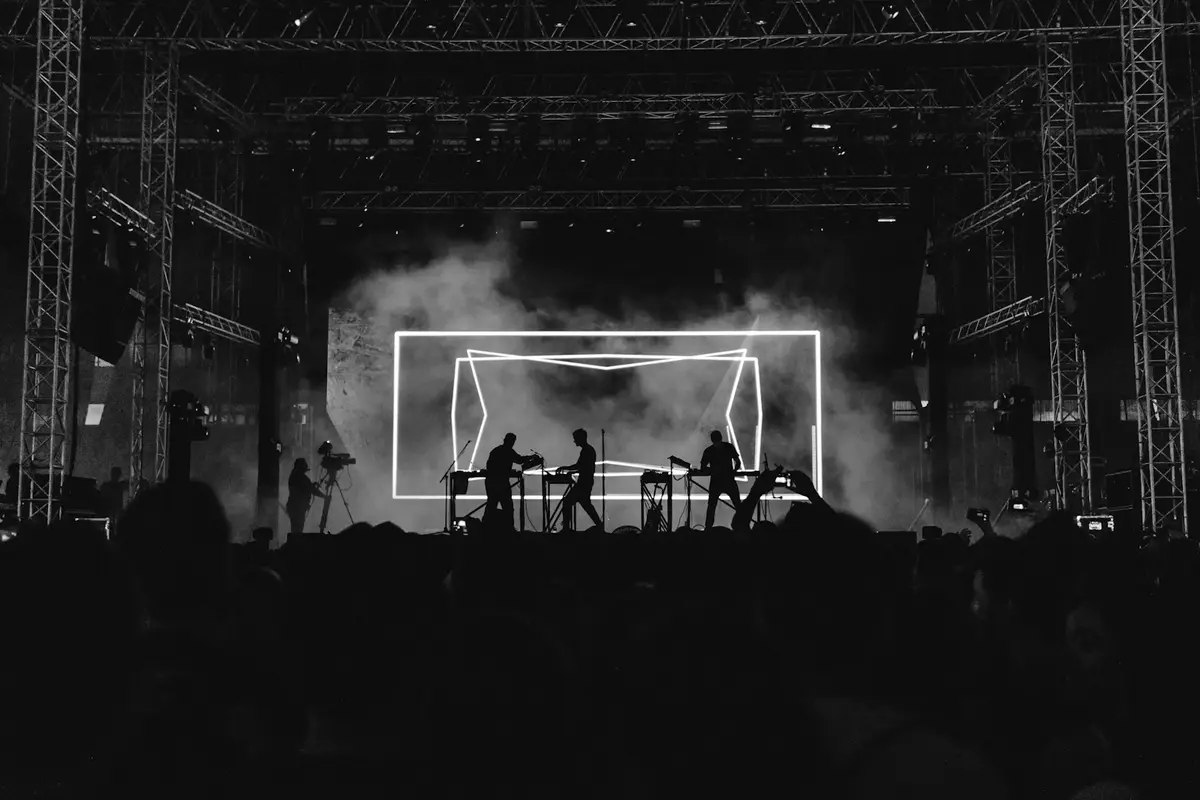
The unglamorous math of touring indie music.
A working journal for the people who load their own amps. Reporting on the craft and the infrastructure that actually keeps independent artists solvent: January van routes, bedroom recording rigs, and sync deals that don’t sign away the masters.
Four working pillars of the independent career.
Every dispatch in the journal sits under one of four departments. Start with the one closest to your current work.
Touring
Routing, advancing, van economics, cross-border logistics, and the reason most tours lose money.
Enter → IIDIY Recording
Home studios, tracking strategies, mixing on a laptop, and when to hire out.
Enter → IIIFilm & TV Scoring
How indie musicians break into sync licensing and the slower route of original scoring.
Enter → IVSongwriting
Structure, craft, rewriting, and why most early songs don't survive second drafts.
Enter →after you’ve already paid to learn it. That’s the point.”
Latest from the road and studio.
The unglamorous math of winter van touring
Why tours in January lose money, and the specific line-items indie bands keep missing when they budget.
CraftA working template for DIY vocal tracking
What an SM7B, a decent preamp, and a closet full of clothes can do, and where they fail.
ScoringA primer on sync licensing for working musicians
The difference between a music supervisor, a sync agent, and a library, and who you actually need.
LogisticsBooking your first cross-country tour without losing your mind
A practical order of operations, from route planning to advance sheets, that doesn't assume you have a booking agent.
CraftWhen songs stop arriving: the working musician's response
Practical habits that separate professional songwriters from the waiting-for-inspiration kind.
BusinessSelf-releasing without signing away your masters
Distribution, publishing administration, and the three contract clauses that quietly transfer ownership.
The Independent Musician’s Touring & Booking Guide.
A 3,500-word reference covering every stage of booking and running an independent tour: initial routing, advance sheets, van economics, merch math, and the specific line-items bands miss when they budget. Updated against the 2026 touring environment.
- Routing and regional circuit logic
- Advancing shows: a template and the questions to ask
- Van, fuel, and lodging math that matches current costs
- Merch pricing and table setup that actually sells
- Cross-border gotchas: Canada → US and back
- When to hire a booking agent (and when not to)
Tour journal: indie touring, 2010–2011.
A retrospective city-by-city archive of the pre-streaming touring economy. Twelve dispatches across the UK, Europe, and Canada.
About the journal.
What is Raespoon & Review?
Raespoon & Review is an independent editorial journal focused on the craft and economics of being a working independent musician. We publish long-form reporting on touring logistics, DIY recording methods, film and TV scoring, songwriting craft, and how artists on the margins of the industry actually sustain a career. We're not affiliated with any label, venue, or specific artist. Our perspective is the perspective of the road, the rehearsal room, and the laptop at 2am.
Who writes for the journal?
Our editorial staff are working and former touring musicians, independent producers, session engineers, and music supervisors. Every article is written by someone who has done the work being described, and reviewed by at least one other practitioner before publication. We don't publish marketing copy or industry press releases dressed as journalism. When we recommend a practice, it's because someone on our team has tried it and failed or succeeded recently enough to remember why.
How often does the journal publish?
We release a monthly issue on the first of each month, numbered sequentially since issue No. 001. Individual articles are often published online ahead of the print issue. Annual archives collect the previous twelve issues into a single reference PDF, available free to our reading list. The monthly cadence is deliberate; it's fast enough to stay current with the touring calendar and slow enough to let writers do actual reporting rather than hot takes.
Do you cover specific artists or scenes?
We focus on craft and infrastructure more than on specific artists, though we do write about regional scenes, Canadian prairie folk, Pacific Northwest indie, East Coast DIY, when the scene itself illuminates broader practices. We avoid personality-driven coverage that treats musicians as brands. When we interview artists, the questions are about how they do the work, not about their identity or image.
Can I contribute or pitch a story?
Yes. Working musicians, engineers, and supervisors are welcome to pitch articles. See our contact page for guidelines. We pay modest rates (not industry standard, but better than most indie music publications). Pitches should describe a specific practice or problem with a strong perspective, not a general overview. The best pitches come from people who've learned something the hard way and can now explain why.